Find Me Gluten Free
- 4.8
- Rating
- 1.00M
- Installs
- Free
- Price

 Analysis by App-foxy
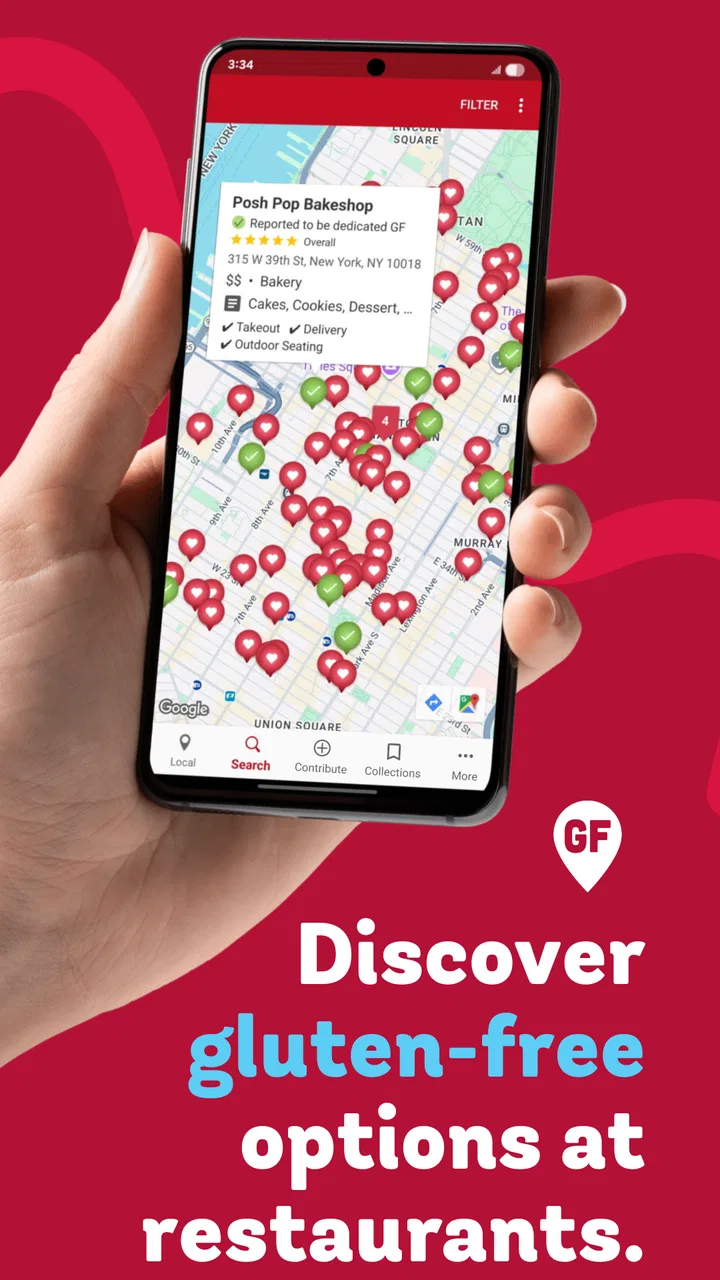
When I need to find somewhere safe to eat without spending half the afternoon checking menus, I want an app that helps me narrow the search quickly and gives me useful context from other diners. Find Me Gluten Free is built for that exact lifestyle problem. It is a free Lifestyle app from Gluten Free Classes LLC, focused on gluten-free restaurant reviews and discovery rather than general restaurant browsing.
My overall impression is that it works best as a practical planning companion. It can help someone locate possible places to eat, compare community feedback, and make a more informed choice before leaving home. It is not a substitute for speaking with restaurant staff about ingredients or preparation, but it gives people following a gluten-free diet a much better starting point than opening a standard map and hoping a restaurant’s menu is accurate.
How Find Me Gluten Free feels in everyday use
The first thing I noticed is that the app solves a very specific frustration: ordinary search tools often treat “gluten-free” as just another keyword. That can produce restaurants with a single token menu item, places that merely mention gluten-free choices, or reviews that do not explain how seriously the kitchen handles dietary needs. A dedicated gluten-free community gives the search more useful context.
You May Also Like

 Blood Strike: 2.5 Anniversary
Blood Strike’s Loadouts Turn Every Drop Into a Tactical Gamble
A close look at Blood Strike’s custom loadouts: how fast access to signature weapons reshapes its battle royale rhythm, rewards preparation, and narrows the gap between fights.

 Pandora - Music & Podcasts
Pandora’s Music Is Easy to Start, but Harder to Recover
Pandora’s strength is its low-effort path from a seed to a station. Its weak spot is how much confidence it asks you to place in connection, setup, and quiet recovery.

 8 Ball Pool
 Is Built on Rivalries, Rematches, and Routine
A close look at the rivalries, rematches, shared routines, and unanswered safety questions that turn a quick pool match into a persistent mobile community.

 Samsung Music
’s Quiet Strength Is Playing What You Already Own
Its reach comes less from spectacle than from dependable access to a personal library. That simplicity is both the app’s strongest retention engine and its ceiling.

 AccuWeather: Weather Radar
AccuWeather Review: A Quick, Clear Forecast for Everyday Decisions
For everyday plans, the best forecast is the one you can understand quickly. AccuWeather makes rain timing, radar, and local conditions easy to act on, with a few trade-offs.

 Hill Climb Racing
Why Hill Climb Racing Still Turns Crashes Into One More Run
A tiny car, a bumpy hill and one more upgrade: Hill Climb Racing keeps resurfacing because its simple chaos makes every near-miss feel personal.
More From Our News Desk



I would use it before a weekend outing, during a road trip, or when meeting friends in an unfamiliar neighborhood. Instead of starting with a long list of every nearby restaurant, I can focus on places that are relevant to gluten-free diners and then read what people have experienced there. That shift saves time, especially when the group needs a decision rather than an endless discussion about possibilities.
The app has been available since September 11, 2010, which gives it a long history in a space where restaurant information changes constantly. Its current version is 3.2.0. That combination suggests a mature product rather than a brand-new experiment, although longevity should not be confused with perfect coverage in every city. Local activity will always affect how useful the results feel.
Its audience is broad enough to include people with celiac disease, those avoiding gluten because of sensitivity, and households that simply want more gluten-free choices. Still, the level of caution needed differs from person to person. Someone with a medically diagnosed condition may need to verify cross-contact procedures directly with the restaurant, even when a listing or review sounds reassuring.
What makes the search more useful than a normal map
A general map is good at showing location, opening hours, directions, and basic business details. It is usually less helpful when the real question is, “Can I eat there with confidence?” Find Me Gluten Free brings the conversation closer to that question by centering reviews from people looking for gluten-free food.
That focus changes how I interpret a restaurant listing. I am not only looking for a menu item. I want to know whether other diners found the staff knowledgeable, whether the available choices felt substantial, and whether the experience was suitable for a quick meal or a longer group visit. Community reviews can reveal practical details that a polished restaurant menu may leave out.
There is an important trade-off, though. User reviews are personal experiences, not guarantees. One diner may be comfortable with a restaurant’s procedures while another may need stricter separation or clearer answers. I treat the app as a way to prepare better questions, not as a final safety certificate.
A realistic dinner scenario
Imagine I am meeting friends after work in an area I do not know well. One person needs to avoid gluten, while the rest of the group wants a normal sit-down meal. I can use the app to identify nearby possibilities, read the gluten-free comments first, and remove restaurants where the reviews are vague or outdated. I can then call the most promising option and ask about the current menu and preparation practices.
That workflow is more efficient than calling every restaurant in the area. It also avoids a common mistake: choosing a place solely because it advertises one gluten-free dish. A review-focused app helps me consider the entire experience, including whether the restaurant seems accustomed to serving diners with dietary restrictions.
For travel, I would search before reaching the destination and save a short list mentally or in my notes. I would not wait until everyone is hungry and then rely on the first result. The strongest use of this app is preparation: research while I still have time to compare choices, then confirm the details close to the meal.
Speed during quick searches and heavier browsing
In normal use, the app’s value depends heavily on how quickly I can move from a broad search to a realistic shortlist. A lightweight search session—checking a neighborhood or looking for a particular type of restaurant—should feel more manageable than manually scanning unrelated map results. The focused subject matter reduces the amount of irrelevant information I need to process.
Heavier use is different. If I am comparing several restaurants, reading many reviews, checking different areas, and changing plans repeatedly, the experience becomes more demanding simply because there is more information to evaluate. The limiting factor is not only app responsiveness; it is also the quality and consistency of community contributions. A fast list is not useful if every entry requires extensive verification.
I find it helpful to search in stages. First, I identify a few nearby candidates. Next, I read the newest-looking or most relevant comments rather than opening every review immediately. Finally, I check the restaurant’s current menu or contact details outside the app when the meal is important. This keeps the process quick without treating the first promising result as a final answer.
People who expect an instant, definitive recommendation may find the app less satisfying. Gluten-free dining involves personal risk tolerance and changing restaurant practices, so a responsible decision often takes more than one tap. The app can shorten the research process, but it cannot remove the need for judgment.
Stability and recovering from an interrupted search
For a restaurant-discovery tool, reliability means more than opening successfully. I also care about whether I can return to a search after being interrupted, switch between candidates without losing my train of thought, and continue planning when a restaurant is busy or the original plan falls through. The app is most useful when it supports that kind of flexible decision-making.
A practical habit is to keep a backup choice. Even a well-reviewed restaurant may be full, closed for a private event, or unsuitable for the group once staff answer specific questions. I would use Find Me Gluten Free to build a small fallback list rather than relying on one perfect result. That is particularly valuable during travel, when changing location takes time.
Community-based information also requires recovery from uncertainty. If two reviews disagree, I do not automatically choose the more positive one. I look for the reason behind the disagreement. One person may be discussing taste and variety, while another is concerned about cross-contact. Those are different standards, and the app is more useful when I read reviews with that distinction in mind.
Restaurant information can age faster than an app release cycle. Menus change, staff turnover happens, and a restaurant may alter its preparation methods. I therefore treat older praise as background rather than current confirmation. The best workflow is to use the app for discovery and personal experiences, then confirm important details directly before ordering.
Device requirements and resource expectations
The app is free to download and is rated for Everyone, making it approachable for households that want to share the task of finding suitable places to eat. It supports Android devices running version 7.0 or later. That is useful for people who keep an older phone, although anyone using a device below that requirement would need a newer compatible device to install it.
I would not choose a phone solely for this app, but the minimum operating-system requirement matters when an older handset is being used as a travel backup. Before a trip, I would install and test the app at home rather than discovering compatibility problems after arriving somewhere unfamiliar.
The app has passed the million-install mark and holds an average rating of 4.8 from around fourteen thousand ratings, with roughly four thousand nine hundred written reviews. Those figures indicate that it has reached a substantial audience and that many users have found it worthwhile. They do not guarantee that every city has equally active coverage, so local usefulness still needs to be judged by the freshness and depth of nearby listings.
Because the app is designed around restaurant discovery and reviews, I would expect the main resource cost to come from browsing location-based content and loading multiple pages of information rather than from complex visual processing. I would avoid leaving a long research session running unnecessarily on a low-battery phone, especially while traveling. A short, focused search followed by saved notes is a sensible routine.
Where the free version fits, and when payment may matter
The free price makes it easy to try without committing to a subscription or upfront purchase. That matters because the app’s usefulness is highly personal: a user in a large city with active gluten-free reviews may get much more from it than someone in a small area with limited community activity.
There are in-app purchases priced at $24.99 per item. I would not pay automatically just because I use the free app. I would first spend time checking whether the basic search and review experience solves my problem, then decide whether any paid option offers enough practical value for my travel habits or regular dining routine.
This pricing structure also makes the app easier to evaluate honestly. Casual users can begin with no cost, while frequent travelers or people who depend on specialized restaurant information may consider additional purchases if the available option matches their needs. The important point is to judge payment by repeated usefulness, not by the number of features listed in an upgrade screen.
Who will get the most from it
Find Me Gluten Free is a strong fit for people who regularly eat away from home and are tired of filtering ordinary restaurant searches manually. It is especially useful for travelers, students living in a new city, parents planning family meals, and anyone who wants community experience alongside a restaurant’s own menu.
I also think it suits people who are still learning how to manage a gluten-free diet. A focused review community can expose them to practical questions they may not have considered, such as whether staff understand the difference between a gluten-free ingredient and a safer preparation process. The app can support better conversations with restaurants and make planning feel less isolated.
It is less suitable for someone who wants a guaranteed medical decision made automatically. It is also not the best choice for a diner who only needs broad restaurant discovery, price comparison, or general reservation planning. A normal map or restaurant platform may be faster for those tasks. This app earns its place when gluten-free relevance is the central requirement.
People who dislike reading user reviews may find the experience slower than a simple map search. The app’s strength is the extra context, and that context requires interpretation. If I only want the nearest open restaurant and have no dietary restrictions, I would probably choose a general-purpose alternative.
Three habits that make the app more dependable
First, I separate discovery from confirmation. I use the app to create a shortlist, but I contact the restaurant when the consequences of a mistake are serious. This avoids placing too much weight on a single review and gives staff a chance to explain current procedures.
Second, I compare several reviews instead of treating the average rating as the whole story. A high score may reflect food quality, friendliness, or portion size, while my priority may be staff understanding and preparation. Reading the details helps me decide whether a restaurant fits my specific needs.
Third, I plan for failure. I keep a second or third option, particularly when traveling or dining with a large group. This is a small change, but it prevents the common situation where one unavailable restaurant ruins the entire evening. The app is more valuable as a planning tool when I use it to build alternatives rather than chase one perfect listing.
A fourth useful habit is to search by area before hunger becomes urgent. When I have time, I can investigate reviews, call ahead, and check whether the restaurant still suits the group. When I wait until the last minute, I am more likely to accept an uncertain option simply because it is nearby.
My performance verdict
After looking at the app through the lens of speed, heavy use, reliability, and device constraints, I see Find Me Gluten Free as a focused utility rather than a complete dining platform. Its performance value comes from reducing irrelevant searching and putting gluten-free experiences closer to the center of the decision. It does not eliminate the work of checking current details, but it makes that work more targeted.
The app’s long availability, large installed audience, strong average rating, and substantial written-review community give it credibility as an established choice. I would still judge it locally, because a well-known app cannot create detailed community knowledge where few people contribute. In an active area, it can become part of my regular routine; in a quiet area, a direct call and a general map may still be necessary.
Android users on version 7.0 or later can try it without paying upfront, and the Everyone rating makes it suitable for a wide range of users. The optional purchases mean frequent users should decide based on actual day-to-day value rather than assuming they are essential.
My recommendation is straightforward: if gluten-free dining affects where you can safely and comfortably eat, this app is worth trying as a research companion. I would use it to discover candidates, study the experiences of other diners, and prepare questions before calling a restaurant. I would not use it as a guarantee, and I would not expect it to replace a general map for ordinary restaurant searches. Used with that realistic approach, Find Me Gluten Free can make unfamiliar dining decisions faster, calmer, and much better informed.
FAQs for Find Me Gluten Free
01What is Find Me Gluten Free, and what can I use it for?
Find Me Gluten Free is a restaurant-discovery app designed to help people locate gluten-free dining options nearby or in a destination they plan to visit. You can browse restaurants, bakeries, cafés, and other venues, read community reviews, check menus or gluten-free details when available, and use map-based search to compare places before deciding where to eat.
02Can Find Me Gluten Free help people with celiac disease or severe gluten sensitivity?
The app can be a useful starting point for finding restaurants that offer gluten-free meals, but it should not replace direct communication with restaurant staff. Listings and reviews are largely based on available business information and user experiences, so preparation methods, cross-contact risks, and ingredient changes may vary. Anyone with celiac disease should always confirm safety with the restaurant before ordering.
03Does Find Me Gluten Free work outside my current location?
Yes. Find Me Gluten Free is useful both for discovering nearby restaurants and for planning meals while traveling. You can search different cities or areas, view available listings on a map, and read feedback from other users. Coverage may differ considerably by region, however, and smaller towns or countries may have fewer listings than major cities.
04Are the restaurant listings, menus, and reviews always accurate and up to date?
Restaurant information can change, so users should treat the app as a helpful guide rather than a guaranteed source of current details. Opening hours, menus, gluten-free offerings, prices, and policies may become outdated, while reviews reflect individual experiences. Before visiting, it is sensible to check the restaurant’s latest information and call ahead if dietary safety is especially important.
05Is Find Me Gluten Free free to download, and are there optional paid features?
Find Me Gluten Free can generally be downloaded without an upfront charge, allowing users to explore gluten-free restaurant information and community feedback. Depending on the platform, region, or current app version, optional premium features or subscription-based tools may be offered. Check the Google Play Store or Apple App Store listing for the latest pricing, included features, and subscription terms before downloading.
Pros
- Large database of gluten-free restaurants and bakeries
- User reviews help identify reliable gluten-free options
- Filters make it easier to find nearby dining choices
- Useful ratings and photos support quick decisions
- Helpful for discovering gluten-free places while traveling
Cons
- Listing accuracy can vary between restaurants and locations
- Some businesses may have outdated menus or opening hours
- User-generated reviews can be inconsistent in detail
- Advanced features may require an account or subscription
- Coverage is stronger in some countries than in others

Find Me Gluten Free
Gallery